
Writer: Brian Guo
From ancient times until the present day, humans have exhibited a fascination with the vastness of space. From the invention of the telescope to present day missions to the red planet, Mars, rockets play a pivotal role in allowing astronauts and scientists to explore the universe beyond our planet. Rockets are amongst the most powerful machines ever created by man, and are able to overcome the gravitational pull of the Earth in order to travel at incredible rates throughout space. Within each of these rockets, however, are the chemical reactions that are responsible for generating the thrust that propels each of these vehicles forward. Thus, an understanding of how rockets generate thrust can be gained through exploring the chemistry of these reactions, the different fuel types that are used in each rocket, and the impact that each of these reactions has upon the environment.
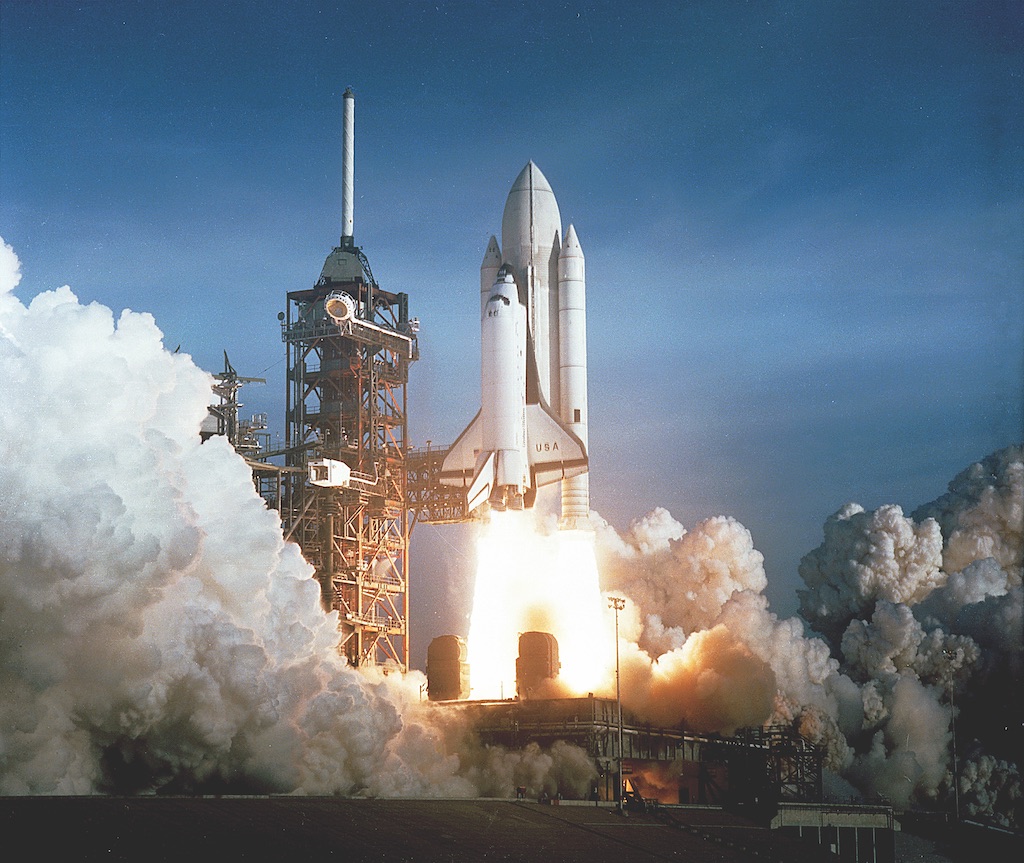
The basic science behind rocket propulsion can be explained through Newton’s Third Law of Motion, which states that for every action, there is an equal and opposite reaction. In other words, the rockets produce thrust by expelling hot gases at high rates out of the rocket. The action of the gases pushing in one direction creates a reaction that moves the rocket in the opposite direction. Additionally, rockets do not rely upon the atmosphere to produce such thrust, as each rocket contains the fuel and the oxidizer required to burn the fuel to create such thrust, even in the vacuum of space.
The science behind creating such powerful thrust from the rockets is through the use of combustion reactions. Combustion is a chemical reaction that occurs between a fuel and an oxidizer to create energy, heat, and gases. Within the rocket engine, fuel is burned within the combustion chamber, producing hot gases that are then released through the nozzle at the rocket engine. The gases exiting the rocket engine are powerful enough to create the thrust necessary to propel the rocket forward.
One of the simplest forms of fuel that can be used within the rocket engine is liquid hydrogen and liquid oxygen. Each of these liquids react to create water and energy. The chemical reaction is represented by the following equation:
2H2 + O2 → 2H2O + energy
The reaction of hydrogen and oxygen releases a significant amount of energy, heats the surrounding gases to temperatures of 3,000 degrees Celsius, and creates the high-pressure gases that are ejected from the rocket engine nozzles to create thrust. Additionally, since this fuel system releases only water as a byproduct, it is considered to be one of the less polluting forms of fuel. Thus, hydrogen fuel was used within the Space Shuttle engines.
Rocket engines depend upon the concept of specific impulse to determine the efficiency of the fuel propellant. Essentially, fuels with high specific impulse can create more thrust with less fuel. Therefore, engineers must consider a variety of different factors related to the fuel as they select a propellant to be used within the rocket engines.
There exist several major types of propellants that may be utilized by rockets.
Solid propellant rockets contain fuels and oxidizers that are combined into solid materials. Once ignited, solid fuels burn continuously until they are entirely consumed. These types of propellants are considered to be reliable and contain fewer components that can fail within the engine. Additionally, solid fuels tend to create powerful thrust when ignited. These types of fuels are often used in the boosters of rockets at launch.
One of the most common forms of solid fuel contains aluminum powder as the fuel and ammonium perchlorate as the oxidizer. Combustion of this fuel creates aluminum oxide, water vapor, nitrogen gas, and chlorine gas. While solid fuels are effective, they are also associated with environmental problems, as the production of hydrogen chloride gas can contribute to issues like acid rain.
Liquid propellant rockets store fuel and oxidizer separately within tanks, and then pumps the fuel into the combustion chamber of the rocket engine. Since liquid propellants require more components to be added and regulated than solid fuel, they are considered to be more complex rocket systems. The advantages of liquid propellant rockets, however, include the ability of their engines to be throttled.
Some of the most common liquid propellants include RP-1 and liquid oxygen, or liquid methane and liquid oxygen.
RP-1 fuel is a form of kerosene. RP-1 fuel and liquid oxygen create carbon dioxide, water vapor, and energy. Additionally, RP-1 fuels are considered to be denser than liquid fuels like liquid hydrogen, which allows them to be stored in the rocket with less effort. Therefore, RP-1 fuel is often used as the fuel for the initial boosters for rockets.
Another type of fuel that is gaining popularity among rocket engineers is liquid methane and liquid oxygen. Methane fuel burns cleaner than kerosene fuels, creating less soot within the engines. Additionally, methane fuel can be produced on Mars through the reaction of carbon dioxide and hydrogen fuels. However, the production of hydrogen fuel requires a great deal of energy. These benefits make methane fuel attractive for future missions to the red planet.
Hypergolic fuels are fuels that ignite upon contact with the oxidizer. Such fuels do not require any additional components within the rocket engine to initiate combustion, which makes them reliable yet potentially dangerous fuels. Hypergolic fuels include hydrazine and nitrogen tetroxide. These fuels are used in spacecraft engines to maneuver within space, but they are considered to be toxic to humans and the environment.
Hybrid rockets include solid fuels and liquid oxidizers. These types of fuels are considered to be safer than solid fuels because the fuel and oxidizer are stored separately within the rocket. Additionally, as with liquid fuels, the combustion within these rockets can be controlled. The drawbacks of these fuels, however, are that they are less efficient than other types of fuels.
Rocket engines utilize nozzles to expel gases at high velocities. Most rockets use de Laval nozzles, which are converging-diverging nozzles. As gases exit the converging portion of the nozzle, their velocities increase. The gases are then released through the diverging portion of the rocket engine nozzles at supersonic rates.
The concept of conservation of momentum also applies to rockets and their nozzles. The momentum of the rocket and its gases is conserved. By expelling gases at high speeds from the rocket, the rocket gains momentum in the opposite direction. The more rapidly the gases are expelled, the greater the momentum and thrust of the rocket engine.
Finally, rocket launches can impact the environment. The engines of the rockets release gases into the atmosphere, which can have an impact upon the environment.
The main fuel for most rockets is RP-1, a kerosene-based fuel that releases carbon dioxide into the atmosphere. Additionally, RP-1 releases black carbon particles, or soot, into the atmosphere. Because rockets often release the soot particles into the upper atmosphere, those particles can remain in the atmosphere for longer periods than other environmental pollutants.
Solid rocket boosters release chlorine-containing compounds that can damage the ozone layer of the atmosphere. The ozone layer protects humans from the harmful UV radiation that comes from the Sun.
The hypergolic fuels, like hydrazine, are additionally polluting for the environment due to their high toxicity. Hydrazine is a highly poisonous chemical that is carcinogenic; it can increase the risk of cancer in those that are exposed to it.
These environmental impacts have led scientists to explore greener alternatives in rocket fuel. The science behind green chemistry includes the use of less harmful, safer chemicals. Companies like SpaceX are interested in replacing hypergolic fuels like hydrazine with non-toxic alternatives. For instance, current spacecraft utilize hydroxylammonium nitrate-based fuels rather than hypergolic propellants.
Additionally, green chemistry aims to minimize pollution and waste. Methane-based fuels are considered to be less polluting than RP-1 fuels because they create fewer carbon particles when burned. Additionally, reusable rocket engines and boosters will additionally lead to a reduction in waste. SpaceX plans to produce reusable boosters for rockets to reduce the amount of fuel required to create new rockets for each rocket launch.
Rocket engines use hydrogen fuel as a means of propelling the rocket. Additionally, the combustion of hydrogen fuel produces water, not carbon dioxide. Thus, hydrogen fuel is considered to be one of the more environmentally friendly fuels. The energy required for hydrogen fuel can be produced through processes like electrolysis of water, but that process is dependent upon energy from fossil fuels. Therefore, scientists are investigating methods of producing “green” hydrogen fuel through the use of sustainable energy sources like water and renewable energy.
An alternative means of propelling rockets is through the use of electric propulsion systems. Electric propulsion systems, like ion engines, produce very little fuel consumption. These engines are used for various types of satellites and space probes. However, electric propulsion systems do not produce enough thrust to launch rockets from the Earth’s surface.
Scientists are also investigating the possibility of utilizing bio-derived rocket fuels. Though still in the experimental phase, the use of these fuels could potentially reduce dependence upon fossil fuels. Additionally, biofuels are a critical component in the growth of sustainable fuels.
Finally, scientists are investigating the use of entirely new types of fuel for rockets. For instance, nuclear thermal rockets could heat hydrogen fuel to high temperatures to increase the thrust of the rocket. Additionally, fusion and antimatter fuels are among the theoretical fuels that would be able to allow rockets to travel even further into the Solar system and beyond.
In each of these rockets, the science behind their ability to create thrust is through the use of combustion reactions within the engines. Additionally, Newton’s Third Law of Motion explains how the expelled gases create the thrust that propels the rocket forward. There are various types of fuels for rockets, each having different advantages and disadvantages. Finally, while rockets are essential for exploration of the solar system, they can have a negative effect upon the environment. However, green chemistry principles can guide the scientists towards the development of safer, non-toxic, less-polluting propulsion systems for rockets. Thus, rocket science is not just an engineering science, but a chemical and environmental science, as well.
NASA. “Spaceships and Rockets – NASA.” NASA.gov, 22 Apr. 2025, www.nasa.gov/humans-in-space/spaceships-and-rockets/.
Benson, Tom. “Rocket Principles.” Nasa.gov, NASA, 13 May 2021, www.grc.nasa.gov/www/k-12/rocket/TRCRocket/rocket_principles.html.
Hathcox, Kyle, et al. “Science Guys | Department of Physics at Union University.” Uu.edu, 2019, www.uu.edu/dept/physics/scienceguys/2002Sept.cfm.
Sparrow, Giles. “How Rockets Work: A Complete Guide.” Space.com, Space.com, 30 June 2021, www.space.com/how-rockets-work.
Sparrow, G. (2021, June 30). How rockets work: A complete guide. Space.com. https://www.space.com/how-rockets-work
发表回复