
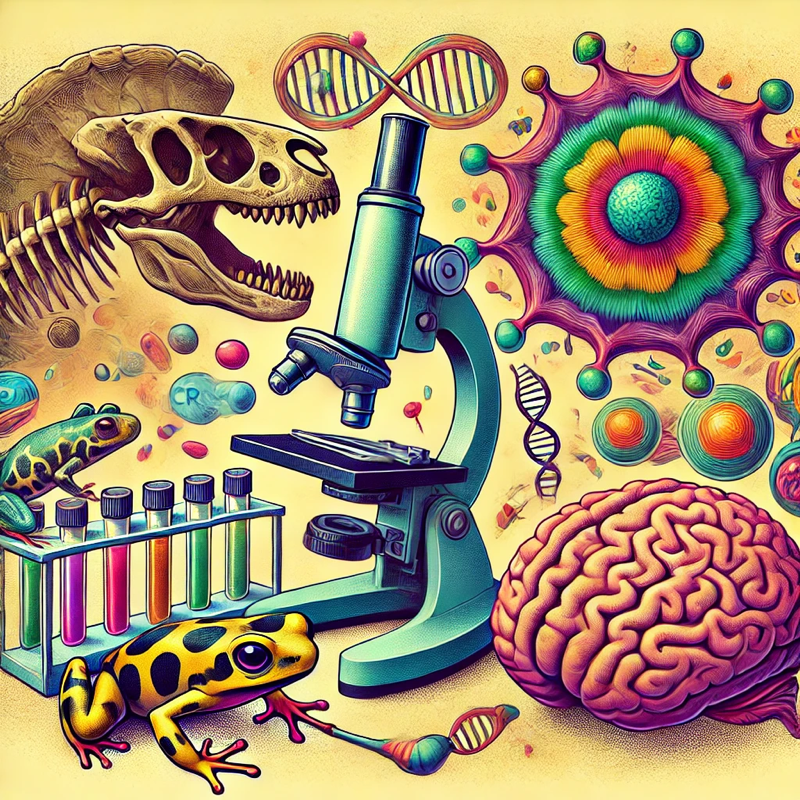
Biology, the study of life, is ever-evolving, and each year, scientists make groundbreaking discoveries that push the boundaries of our understanding. From ancient fossils shedding light on early life forms to cutting-edge genetic engineering technologies, these advances open up exciting possibilities. Let’s explore some of the most fascinating biological discoveries that are reshaping the field and transforming our view of life on Earth.
1. Ancient Fossils: Uncovering Earth’s Oldest Life Forms
Recent fossil discoveries have unearthed evidence of life that dates back billions of years. For example, researchers discovered fossilized microbial mats in Australia that are over 3.5 billion years old. These stromatolites offer insights into the earliest forms of life and how they might have survived harsh environments, hinting at how life could potentially exist on other planets.
In a separate discovery, the remains of a gigantic marine reptile—Ichthyosaur—were found in England. This well-preserved fossil showcases the diversity of life that once inhabited our oceans, highlighting the fascinating evolutionary history of marine reptiles. Such findings help scientists understand the adaptation mechanisms that have allowed species to thrive through millennia.
2. CRISPR Gene-Editing: The Frontier of Genetic Medicine
CRISPR technology continues to revolutionize biology, especially in the field of genetic medicine. CRISPR (Clustered Regularly Interspaced Short Palindromic Repeats) allows scientists to edit DNA with unprecedented precision, potentially curing genetic diseases like sickle cell anemia, cystic fibrosis, and muscular dystrophy.
Recently, researchers made a breakthrough by using CRISPR to modify genes in plants to make them more resistant to climate change. This innovation could play a crucial role in addressing food security challenges in the face of global warming. The CRISPR revolution not only transforms medicine but also paves the way for genetically optimized crops that could sustain the planet’s growing population.
3. Discovery of New Species: Nature’s Endless Diversity
The discovery of new species is always thrilling, and 2024 has already brought to light several remarkable ones. In the rainforests of Madagascar, biologists uncovered a new species of brightly colored frog. This small, vibrant amphibian, with its neon-green and blue hues, has adapted unique camouflage mechanisms and toxins for protection against predators.
On another front, in the deep sea, an unknown species of bioluminescent jellyfish was discovered. Its mesmerizing glow and intricate body structure remind us of the unexplored richness of oceanic life. Such discoveries emphasize the diversity and resilience of ecosystems that have yet to be fully studied and understood.
4. Neuron Mapping and the Secrets of Consciousness
In neuroscience, recent advancements in brain mapping technology have allowed scientists to visualize neural networks in unprecedented detail. By using advanced imaging techniques, researchers are beginning to unravel the complex pathways involved in memory, cognition, and even emotions.
A recent study revealed new insights into how memories are stored and recalled, showing that they are distributed across various brain regions rather than localized in one area. This discovery has significant implications for understanding conditions like Alzheimer’s and developing potential treatments.
Furthermore, scientists are exploring the possibility of brain-computer interfaces that could, in the future, allow humans to control prosthetics or computers with their minds. These developments open up exciting prospects for those with neurological conditions or mobility impairments, demonstrating the intersection of biology and technology.
5. Cellular Mysteries: New Insights from Microbiology
Microbiology remains a vast and exciting frontier, and recent discoveries have uncovered novel cellular mechanisms. For instance, researchers found a new type of immune cell capable of targeting and destroying cancer cells more effectively than existing treatments. This could revolutionize immunotherapy approaches, making treatments less invasive and more efficient.
Additionally, scientists have discovered a bacterium capable of breaking down plastic, potentially offering a biological solution to the world’s plastic pollution problem. By understanding and harnessing these microscopic organisms, biology offers tangible answers to some of humanity’s most pressing environmental challenges.
Conclusion
Biology is a field of endless discovery, with each year unveiling new secrets about life on Earth and beyond. From ancient fossils that provide a window into early life forms to groundbreaking genetic and cellular technologies that shape our future, these discoveries showcase the dynamic and transformative power of biological research. As we continue to explore the depths of our planet and the intricacies of our bodies, the potential for future breakthroughs remains limitless, promising an exciting journey ahead for scientists and enthusiasts alike.
Stay tuned for more updates on the ever-evolving world of biology, where each discovery opens new doors to understanding the mysteries of life!
发表回复